

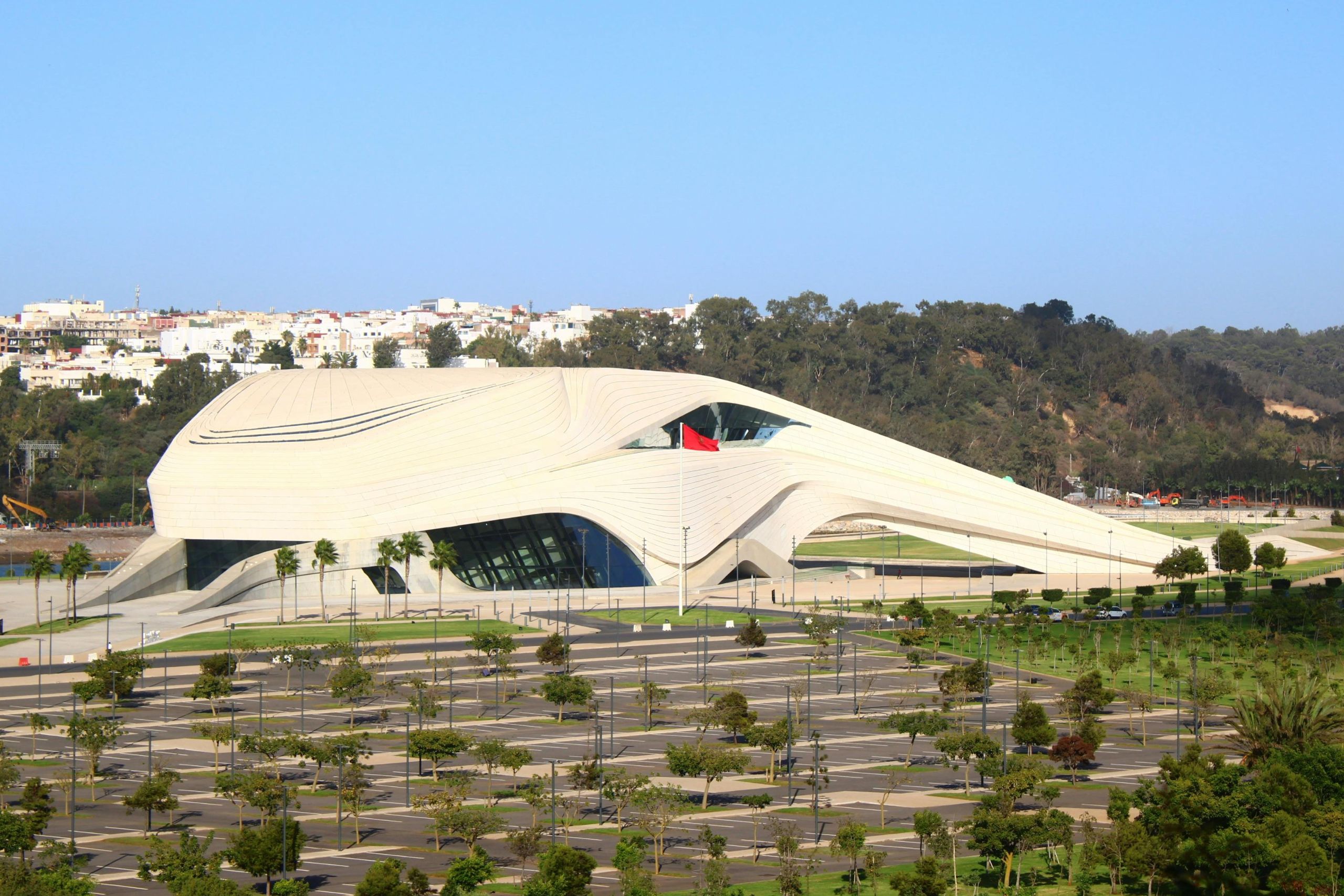
Royal Theatre Rabat is set to become one of Africa’s most remarkable cultural destinations, and a defining symbol of Morocco’s creative ambition. For decades, Morocco has invested in culture as a foundation for national identity. Now, the Royal Theatre Rabat brings that commitment to life in spectacular form. This extraordinary project combines bold architecture with a deep respect for Moroccan heritage, creating a space where art, history, and community can meet.
Royal Theatre Rabat: A Vision Decades in the Making
The Royal Theatre Rabat is not a recent idea. King Mohammed VI first announced this vision in the early 2000s, as part of a broader plan to position Morocco as a leader in arts and culture across Africa and the Arab world. The project reflects a clear national ambition: to build institutions that serve both citizens and artists.
Furthermore, the location itself carries meaning. Situated in Rabat — a UNESCO World Heritage city — the theatre stands as a bridge between Morocco’s ancient past and its modern future. The capital is already home to important monuments. This new landmark adds a living, breathing cultural centre to that list.
Architecture That Speaks a Universal Language
The design of the Royal Theatre Rabat is striking. The structure draws from traditional Moroccan architecture — intricate geometric patterns, grand archways, and natural materials — while incorporating modern construction techniques. The result is a building that feels both timeless and forward-looking.
Also impressive is the scale. The theatre includes multiple performance spaces, designed to host opera, theatre, dance, and large concerts. Each space meets international technical standards. As a result, the Royal Theatre Rabat can attract world-class productions and performers from across the globe.

Culture as a Tool for Development
Morocco’s investment in this project sends a clear message. Culture is not a luxury, it is a driver of education, tourism, and economic growth. The Royal Theatre Rabat will create jobs for artists, technicians, designers, and administrators. In addition, it will attract visitors to Rabat throughout the year, strengthening the city’s position as a premier destination.
Indeed, similar projects across Europe and Asia show that landmark cultural buildings generate significant long-term returns. Morocco is following a proven path, while adding its own distinct identity to the model.

Royal Theatre Rabat and the Future of Moroccan Culture
The Royal Theatre Rabat represents more than a building. It is a statement about what Morocco values and where it is headed. By placing culture at the centre of national development, Morocco demonstrates that heritage and progress are not opposites , they are partners.
Therefore, this project deserves attention from anyone who follows architecture, culture, or African development. The Royal Theatre Rabat will inspire artists, welcome audiences, and show the world what bold cultural vision looks like. Watch this space , Morocco is building something extraordinary.

More about the Royal Theatre of Rabat
Hespress (French source) — Le Théâtre Royal de Rabat
UNESCO — Rabat, Modern Capital and Historic City